
Please note: This blog and its accompanying video discuss the important and troubling issue of weight bias and discrimination, which may be a sensitive topic for some readers.
How common is weight stigmatization in health care?
Described as the last “acceptable” form of bias, weight stigma is the rampant discrimination and stereotyping of overweight individuals. Fifty overweight women were asked to keep a diary of all the times they felt they were being stigmatized for their weight. Over a single week, more than a thousand instances were recorded. An overweight woman may expect to be harassed (such as being called names or insulted), run into physical barriers (like being unable to fit into public seats), or discriminated against (such as receiving perceived poorer service at restaurants or stores) on average about three times a day. Obese men report three times less discrimination than women of the same size, so it may be only a daily occurrence for them.
They’re not just being paranoid. Studies using professional actors posing as job applicants made up with theatrical prostheses to appear overweight were significantly more likely to face discrimination than when appearing at their normal weight. This employment bias was found to be especially prejudiced against overweight women compared to men.
Attitudes can also be explored in surveys. In a comparison of 16 stigmatized social groups, such as people experiencing homelessness, “only drug addicts and smokers were seen as more disgusting than obese people,” as you can see below and at 1:42 in my video Weight Bias: Hating Their Guts.
The researchers did note, however, there was effectively a tie: “[O]bese people were rated just as disgusting as politicians.”
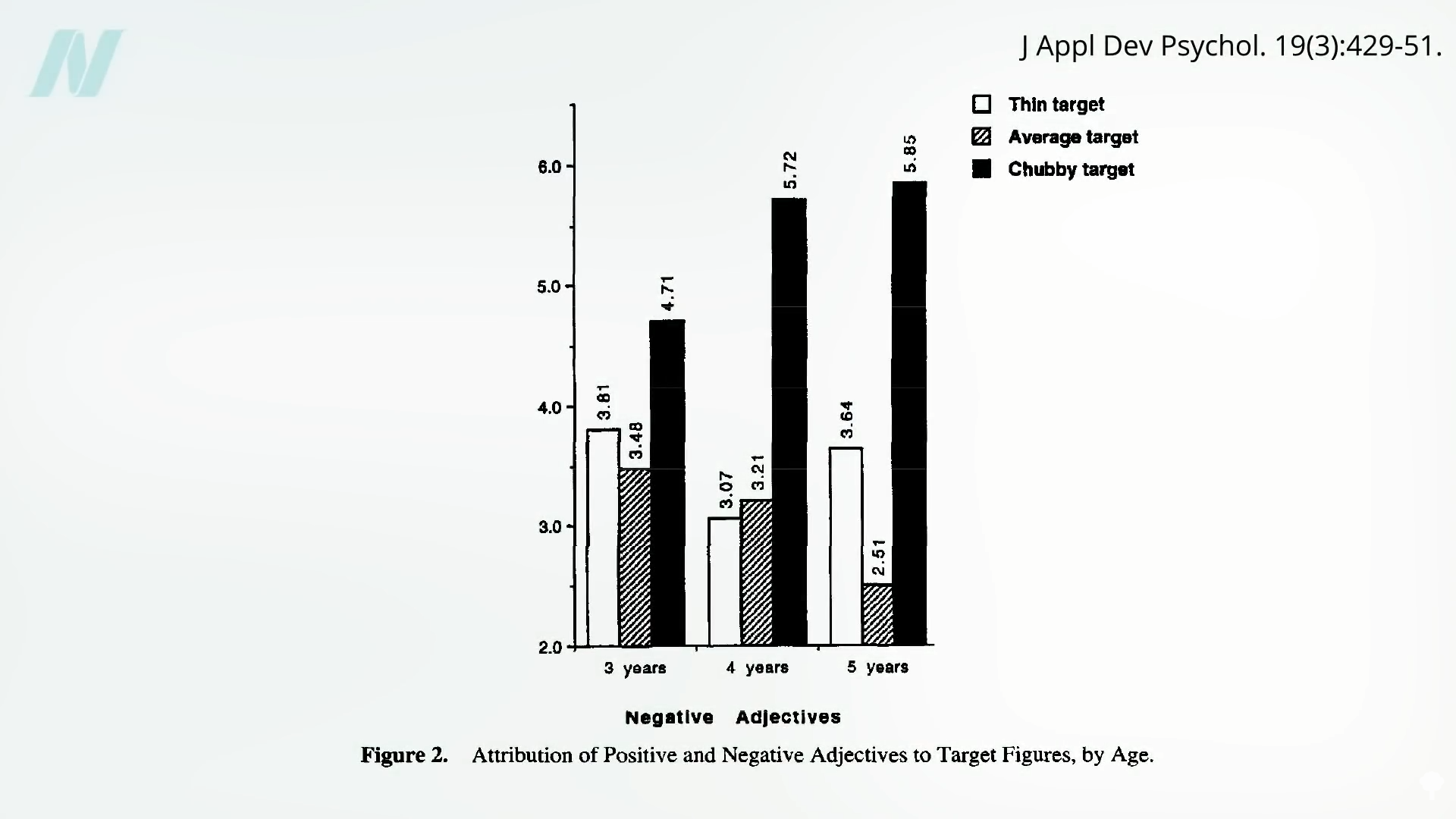
This weight stigma starts surprisingly young. Children as young as three years old describe overweight peers as “mean,” “stupid,” “lazy,” and “ugly.” The negative language increases with age, as you can see below and at 2:14 in my video.
Then, there was that famous study published in 1961. Children in summer camps and schools across a swath of different social, cultural, and ethnic backgrounds in California, Montana, and New York were shown pictures of different children and asked to rank who they liked best. The images included a child with crutches and a leg brace, a child in a wheelchair, a child missing a hand, a facially disfigured child, and an obese child. In every group of kids tested, there was “remarkable uniformity.” The obese child always came in dead last.
That was ages ago, though. In 2003, researchers published the 40-year follow-up. The study was repeated, and the title of the study gives it away: “Getting Worse: The Stigmatization of Obese Children.” The obese child was liked even less in the follow-up study than in 1961! This parallels trends throughout society, with a near 70% jump in perceived weight discrimination recorded in national surveys since the mid-1990s.
Attitudes among teachers may not be helping. More than a quarter of teachers and other school staff surveyed felt that becoming obese is “one of the worst things that could happen to a person.” Even parents can be biased, providing less support for college for their overweight daughters compared to thinner siblings, for example. As two prominent obesity researchers commented, “It is strong prejudice indeed when parents discriminate against their own children.”
What about doctors? One representative national survey found that more than half of physicians “viewed obese patients as awkward, unattractive, ugly, and noncompliant.” About a quarter of nurses agreed or strongly agreed with the statement: “Caring for an obese patient usually repulses me.”
This antagonism can have serious health consequences for those who may need it the most. For example, obese women are at higher risk for developing cervical cancer, as well as developing endometrial and ovarian cancers, yet they are less likely to be screened. Morbidly obese patients have only about half the odds of getting their recommended pelvic exams. Part of this may be avoidance on the part of the patient, but some doctors turn obese patients away. The Sun Sentinel polled OB/GYN practices in Florida and found that as many as one in seven refused to see heavier women and set weight cut-offs for new patients beginning at 200 pounds.
Even doctors who welcome obese patients have been found to give them short shrift. Physicians randomized to receive a medical chart of a migraine patient who was either presented as average weight, overweight, or obese said they would give the obese patient about 28% less of their time. And it’s less quality time. Recorded doctors’ visits found that physicians tend to build “less emotional rapport with overweight and obese patients.”
Even obesity specialists profess increasingly explicit anti-fat attitudes. Worsening in surveys taken between 2001 and 2013, obesity specialists “described fat people as significantly more lazy…stupid…and worthless…compared to thin people.” Even in the medical literature, you’ll find lines like this, an example from Annals of Internal Medicine: “Obesity is an aesthetic crime: it is ugly.”
The good news is that they appear able to hide their disdain. In a study entitled “Obese Patients Overestimate Physicians’ Attitudes of Respect,” despite the negative attitudes doctors harbored toward their obese patients, the same patients expressed their satisfaction with their providers. The researchers concluded, “While physicians may be successfully playing the part, the lack of true respect suggests…the authenticity of the patient-physician relationship should be questioned.”
Doctor’s Note
The next blog in this two-part series is The Burden of Weight Bias.
Both blogs in the series are drawn from my book How Not to Diet.