
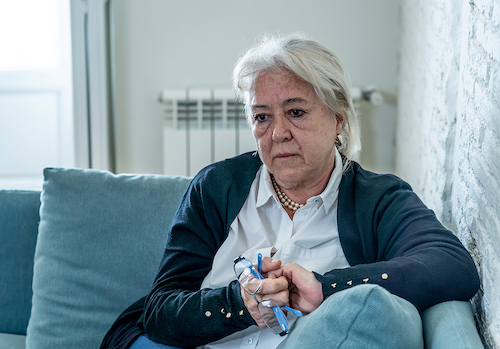
A new study published in the Journal of Nature Communications looked at the relationships between loneliness, social isolation and health.
“Our study examined whether both loneliness and social isolation are linked to a range of health outcomes,” study author Dr. Zoe Reed told us. “We used a combination of different approaches and assessed evidence across these approaches to determine whether there may be effects of being lonely or socially isolated on mental health and wellbeing, physical health conditions and general health.”
The three different research methods used in the study included observational analysis, sibling comparisons, and Mendelian randomisation, a genetics-based approach, to build a clearer understanding of these relationships.
Previous research suggests that loneliness and social isolation are related to a range of health conditions. However, many of these have been limited as they cannot distinguish between whether, for example, loneliness might lead to poorer health or whether poorer health might cause someone to be more likely to experience loneliness. The current study sought to gain greater confidence in the direction of these relationships.
“We collaborated with the charity Nesta, a research and innovation foundation who funded the study,” Dr. Reed told us. “They were particularly interested in understanding the relationship between loneliness and health, given that loneliness has increasingly been recognized as an important public health concern, yet the nature of these relationships with health is unclear.”
The research team used something called a ‘triangulation’ approach, where they combined three statistical methods which each have their own strengths and limitations to better understand the relationships between both loneliness and social isolation and a range of health outcomes (specific conditions as well as general health).
“To do this, we used data from participants in UK Biobank and genome-wide association studies. UK Biobank is a large and comprehensive dataset containing biological, health and lifestyle information from 500,000 volunteers in the UK. The genome-wide association studies include information, often from hundreds of thousands of participants from a range of sources, that tell us about how genes relate to things like being lonely or having a particular health condition.”
The study results showed that being lonely was linked to a higher risk of poorer mental health, such as having depression, and poorer wellbeing. Being lonely was also linked to having poorer general health (which incorporates both physical and mental health). Whereas, being more socially isolated was linked to lower wellbeing.
“Our results for mental health and wellbeing are not particularly surprising, however, they do highlight the importance of the role loneliness, in particular, may play in mental health and wellbeing,” Dr. Reed told us. “The finding of links with general health are also important and highlight the broader impact of being lonely on health. Our findings suggest that loneliness and social isolation are important public health issues and make an important contribution to our understanding of the impact of these on health. More research is needed to really understand how they impact mental health, wellbeing and general health, so that support can be targeted in the most effective ways.”
Categories: Aging , Anxiety , Depression | Tags: loneliness, mental health, depression
Patricia Tomasi is a mom, maternal mental health advocate, journalist, and speaker. She writes regularly for the Huffington Post Canada, focusing primarily on maternal mental health after suffering from severe postpartum anxiety twice. You can find her Huffington Post biography here. Patricia is also a Patient Expert Advisor for the North American-based, Maternal Mental Health Research Collective and is the founder of the online peer support group – Facebook Postpartum Depression & Anxiety Support Group – with over 1500 members worldwide. Blog: www.patriciatomasiblog.wordpress.com
Email: tomasi.patricia@gmail.com